 BACK
BACK Bright
 Dark
Dark Floral Print
 Multicolored
 White
White Pink
Pink Beige
Beige Red
Red Blue
Blue Green
Green Purple
 Black
Black Gold
Gold Silver
 Neutral
 BROWSE ALL DRESSES
Spring Engagement Photoshoot Ideas 2026: Locations, Colors & Outfits
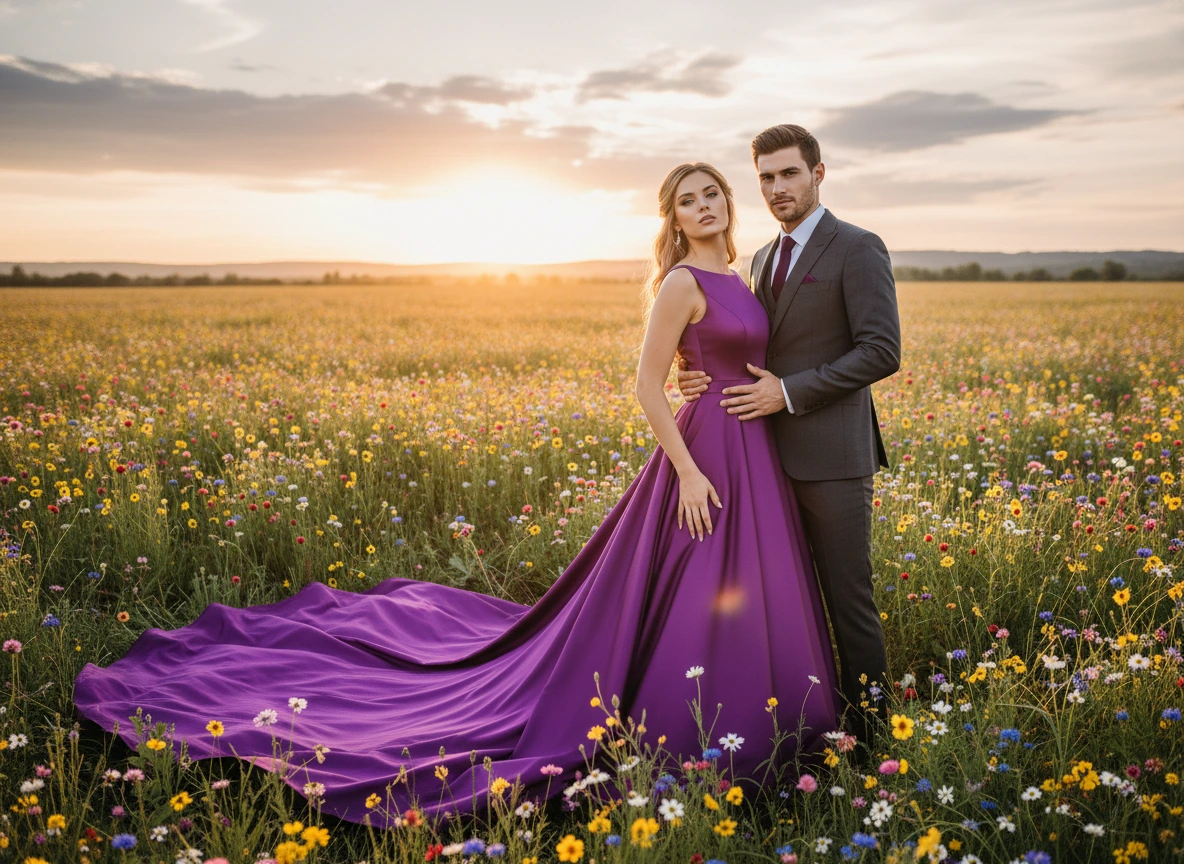
Spring comes fast. And if your engagement shoot is booked for April, May or June — you’re probably already thinking about where to go, what to wear and how to make it all feel like you. Good. Let’s talk through it.
This isn’t a list of generic tips. It’s more like the conversation we’d have if you came into the studio and said, “Helen, I have no idea where to start.” We’ve helped dress hundreds of couples for engagement shoots — across Canada & across U.S. Here’s what we’ve learned about making spring sessions unforgettable.
Why Spring Is the Best Season for Engagement Photos
We’re a little biased — but spring genuinely is the sweet spot for engagement photography. The light is softer than summer, the landscapes are alive without being chaotic and the temperatures are forgiving enough that a long-train gown doesn’t feel like a punishment. Think about what’s actually happening outside in April and May – cherry blossoms in Toronto and Vancouver, tulip fields in the Holland Marsh, golden-hour windows that last well into the evening. Photographers love shooting in spring because the natural light does half the work — you get those warm, slightly hazy tones that make images look like they belong in a film without any filters.
There’s also a practical reason couples love spring engagement shoots: the timing lines up perfectly with fall or winter weddings. You get the photos done while the energy of the engagement is still fresh and you have finished images for save-the-dates before summer even hits. Spring also tends to be less booked than fall for photographers — request your rental early to secure the gown you want. The difference between shooting at 9am and 5pm in May can be the difference between flat light and magic hour. That window matters more than most people think.
Spring Locations That Actually Work
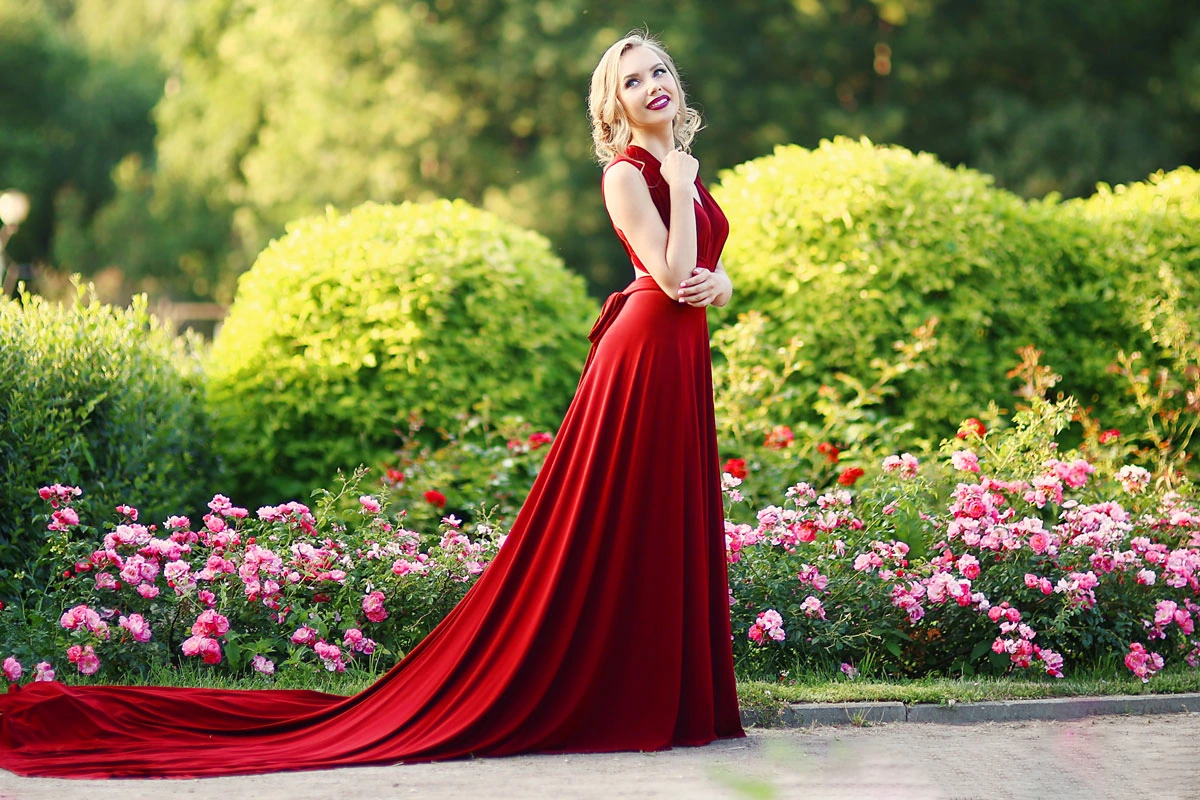
Location is the first conversation worth having — before the outfit, before the colour palette and honestly before anything else. The right setting doesn’t just give you a pretty background. It determines what your photographer can do, how the dress moves and whether the images feel like a snapshot or a story. Spring in the GTA and across Canada opens up options that simply don’t exist in other seasons: bloom-covered parks, open tulip fields, soft-lit forests and water that actually reflects something worth seeing. The challenge isn’t finding a beautiful location — it’s finding one that matches what you’re going for and isn’t overrun with people at 10am on a Saturday.
Bloom Season – Cherry Blossoms and Tulip Fields
If you’re in the GTA, Trinity Bellwoods and High Park fill up with cherry blossoms in late April. Beautiful — yes. Crowded — extremely. The trick is to book your photographer for early morning (7am is not too early) or go on a weekday. By 10am on a Saturday in April, High Park is not a romantic setting.
For something more private and frankly more dramatic, consider the tulip fields in the Holland Marsh area, about 45 minutes north of Toronto. Rows of colour, open skies and space to actually move — a long-train dress in motion against that backdrop photographs beautifully.
Urban and Industrial – The Unexpected Spring Setting
Not every spring shoot needs to be surrounded by flowers. Some of the best engagement sessions we’ve seen come from contrast — a flowing ivory gown against exposed brick, or a deep jewel-toned dress against a concrete underpass. King West, Distillery District and Liberty Village all have that editorial quality that photographs exceptionally well in spring afternoon light. The cobblestone and cast iron in the Distillery District especially — it gives long-train gowns a period drama quality that’s hard to replicate anywhere else. See our full guide to top engagement photography locations in Toronto.
Open Fields, Forests and Water
This is where long-train gowns do their best work. Open fields give you room to move, room to spin and enough distance for wide shots that show the full silhouette. Rattlesnake Point, the Scarborough Bluffs and the trails around Barrie all offer varied terrain and enough privacy to actually enjoy the shoot. Water is underrated as a spring backdrop — the reflections, the texture, the way late-afternoon light bounces off the surface. A lakeside location gives you images with a depth that’s genuinely hard to recreate in a studio.
Spring Colour Palettes for Engagement Photos
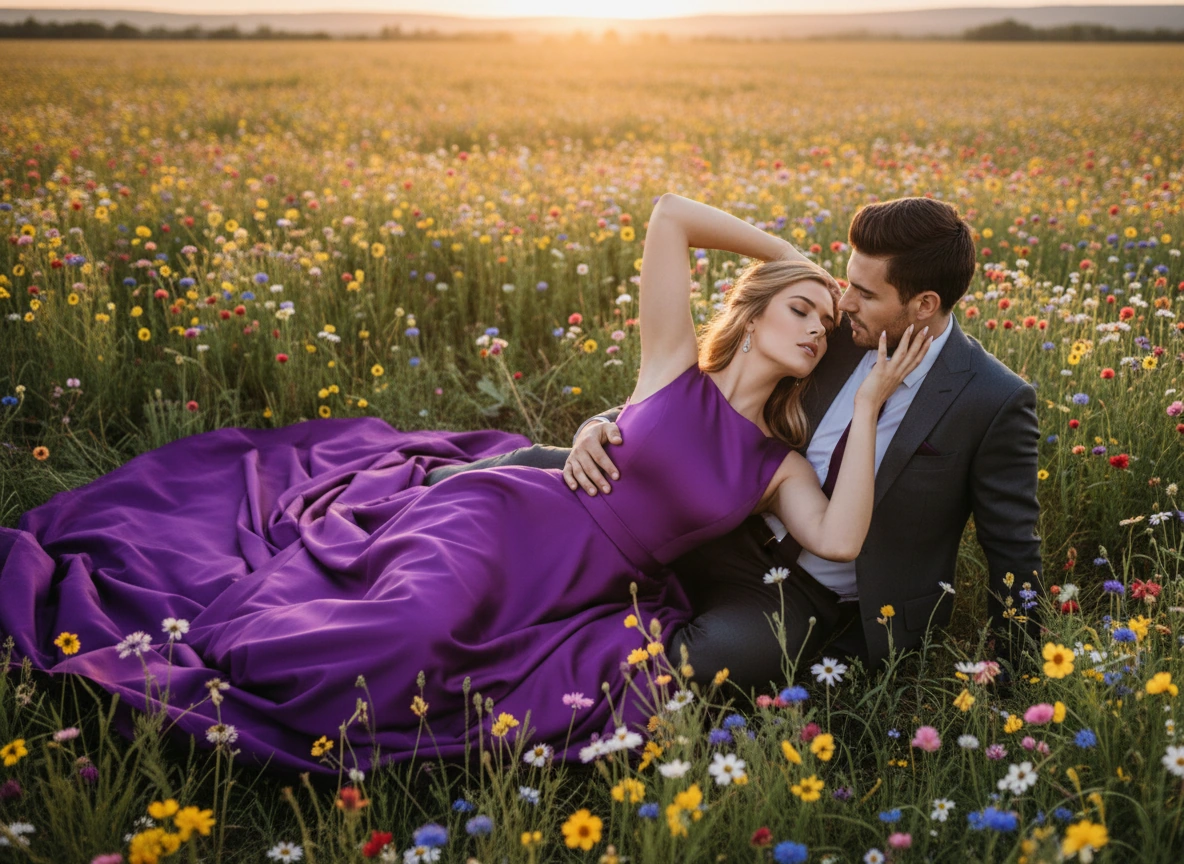
Colour is the second conversation — and it’s one people often leave too late. Your dress and your partner’s outfit need to work together, work against the location and photograph well in whatever light your session is scheduled for. These aren’t the same three things. A palette that looks stunning in a golden field can fall completely flat against cobblestone and vice versa. The good news is that spring gives you the most range of any season: you can go soft and romantic, bold and cinematic or earthy and grounded depending on the feeling you’re after. All three work — it just depends on where you’re shooting and what you want the images to say. Our engagement photo outfits guide breaks down what works by season and setting.
Soft and Romantic
Ivory, blush, champagne, soft sage. This is the classic spring palette and it’s classic for a reason — it reads beautifully against natural greens and bloom backgrounds. The risk is it can get safe. If you want the romantic look with more edge, add contrast: dark hair, a deep floral bouquet or a partner in charcoal.
Bold and Cinematic
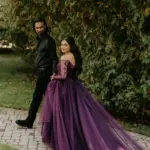
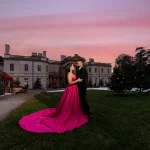
Deep mauve, forest green, cobalt blue, rich terracotta. These don’t say “spring” in the obvious way — but they photograph with a depth and drama that soft palettes can’t match. Against green foliage or blossoming trees, a jewel-toned dress creates contrast that makes the image pop without any editing. Bold colours also hold their own in urban settings where soft palettes tend to wash out against concrete and brick.
Earthy and Natural
Warm beige, terracotta, warm white, rust. This palette has been growing for a few years and it still reads as timeless rather than dated in 2026. It works across a wide range of skin tones and photographs beautifully in warm golden-hour light — particularly in lace or textured fabrics. A lace gown in warm ivory against a field at sunset doesn’t need much context. It just works.
What to Wear – The Dress Conversation
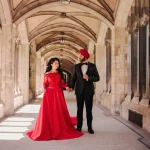
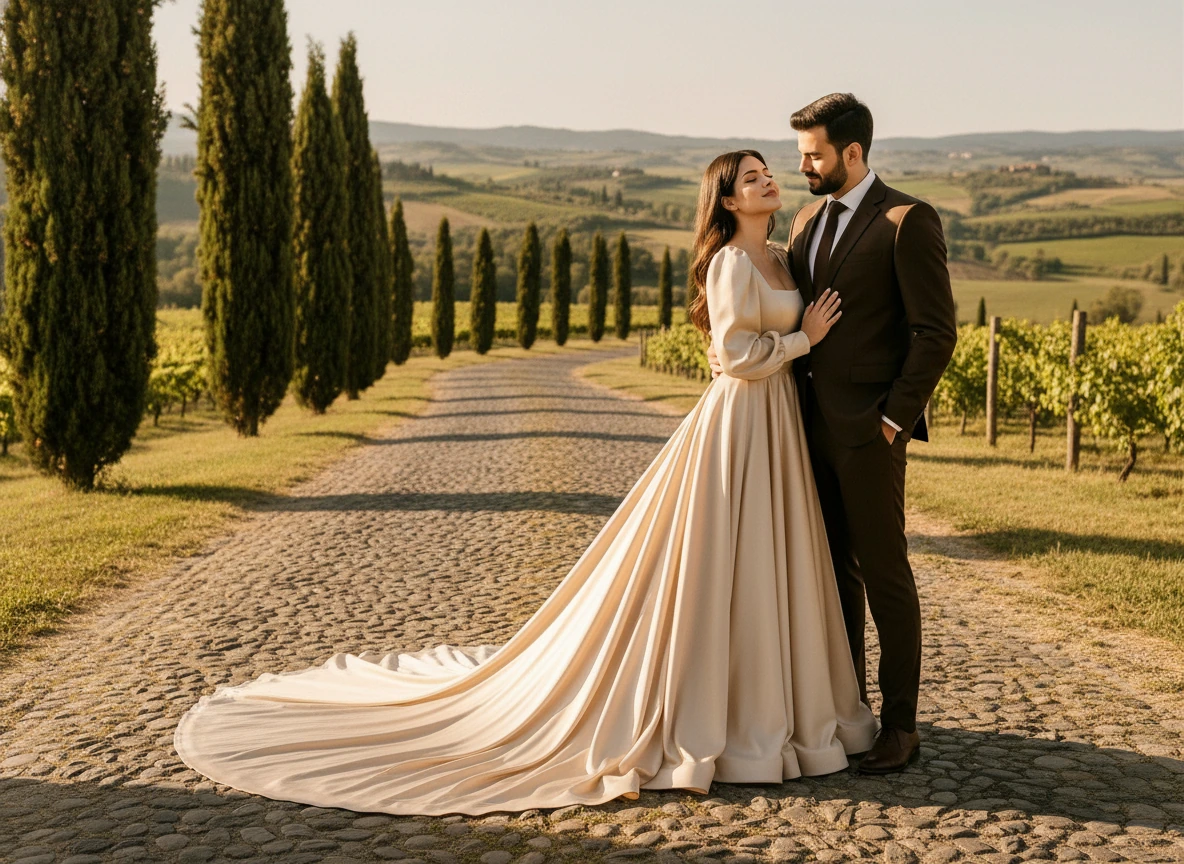
Here’s the thing no one tells you: in an engagement shoot, the dress is not just an outfit. It’s a character. A long-train gown in motion changes what the photographer can do, what the images feel like and how you feel during the shoot — and that last part affects everything. Couples who feel comfortable and genuinely stunning in what they’re wearing move differently, interact differently and that shows in the photos. This is exactly why every gown in the Athena catalogue is designed specifically for the camera. Not for walking down an aisle, not for a gala — for movement, for drama and for what happens when fabric catches light at the right angle. Our sizing and fit page explains how every gown adjusts to your frame — corset backs, no tailoring needed.
All 200+ gowns were built with this in mind. Every fabric choice — satin, tulle, lace, silk sourced from around the world — was made deliberately. The trains are built to flow, spin and catch air in ways that transform a shoot from beautiful to genuinely breathtaking. These gowns have been worn in sessions across Paris, Venice, Dubai and from coast to coast across Canada and the United States.
Matching Your Dress to Your Location
Location and dress need to have a conversation before the shoot day. A few rough rules that hold up in practice:
- Floral or natural locations → soft satin, tulle or lace in blush, champagne, sage or ivory. The dress complements the setting rather than competing with it.
- Urban or industrial settings → bolder colours, heavier fabrics, more structured silhouettes. A dark jewel-toned gown against brick reads completely differently than a soft blush one — and usually better.
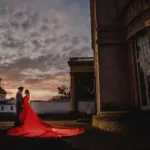
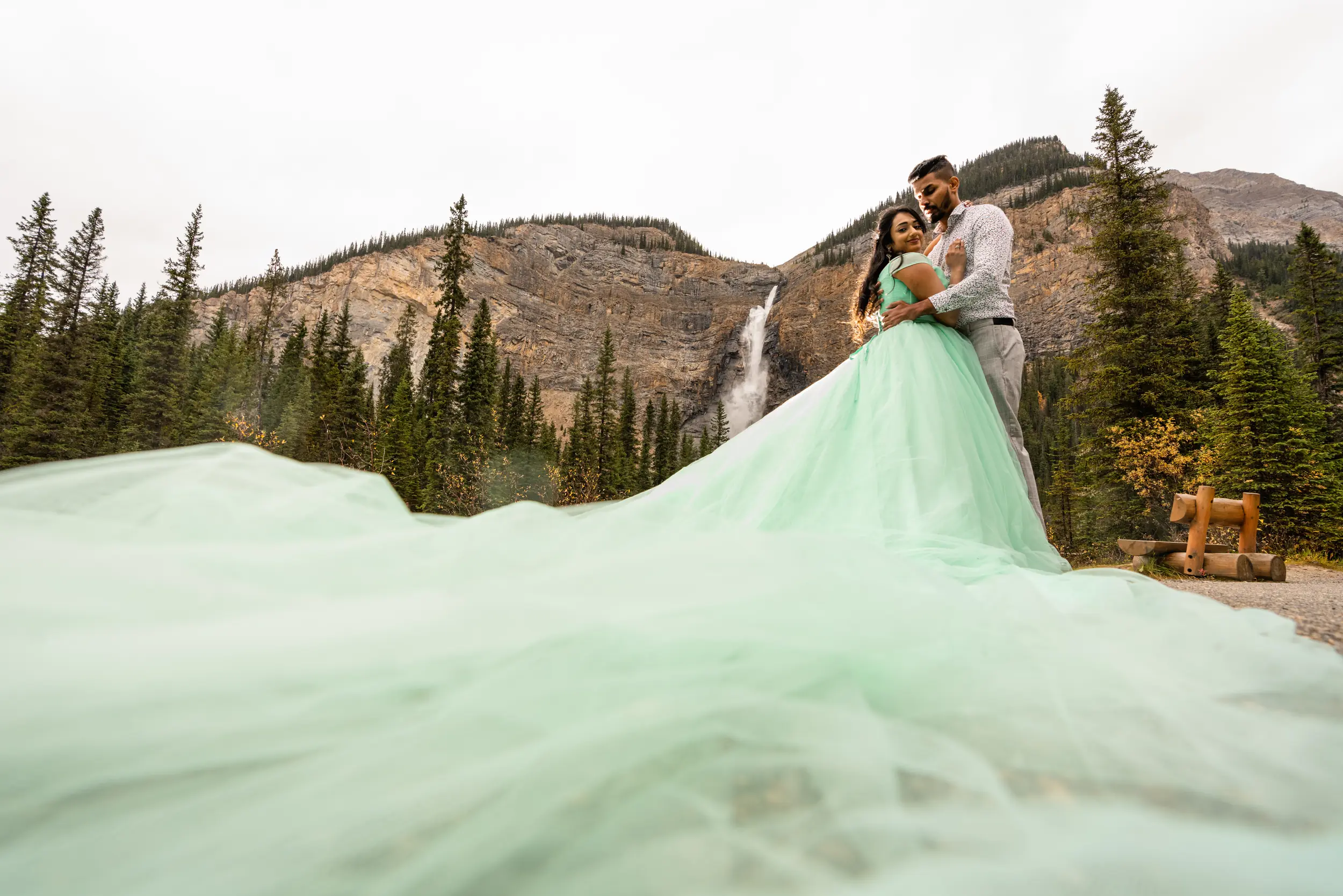
- Open fields or landscapes → anything with a long train and movement potential. This is where the flying dress photoshoot moment happens and you need space, wind and a dress built for it.
The Flying Dress Shot – How to Actually Get It
If you’ve been on Instagram in the last two years, you’ve seen it — gown fully airborne, couple in frame, everything looks effortless. It is not effortless, but it’s also not as complicated as it looks once you understand what makes it work. You need wind, or enough space for the photographer or an assistant to create movement manually. You need a dress with enough train length and fabric volume to actually catch air. And you need a photographer who knows how to time the shutter — because the window where everything is in the air and in frame is usually under a second.
One Last Thing
Spring shoots book fast — not because we’re pushing urgency, but because photographers’ calendars fill up and the most-requested gowns go with them. If your shoot is in May or June, sorting the dress now rather than six weeks from now is just the easier path. Browse the full dress catalogue and see what catches your eye.
About the designer
Helen Illumina is the self-taught designer behind Athena Dress Rental, creating couture gowns in Canada using premium fabrics sourced worldwide.
about us