 BACK
BACK Bright
 Dark
Dark Floral Print
 Multicolored
 White
White Pink
Pink Beige
Beige Red
Red Blue
Blue Green
Green Purple
 Black
Black Gold
Gold Silver
 Neutral
 BROWSE ALL DRESSES
Long Train Dress vs. Regular Dress for Engagement Photos – What Actually Photographs Better
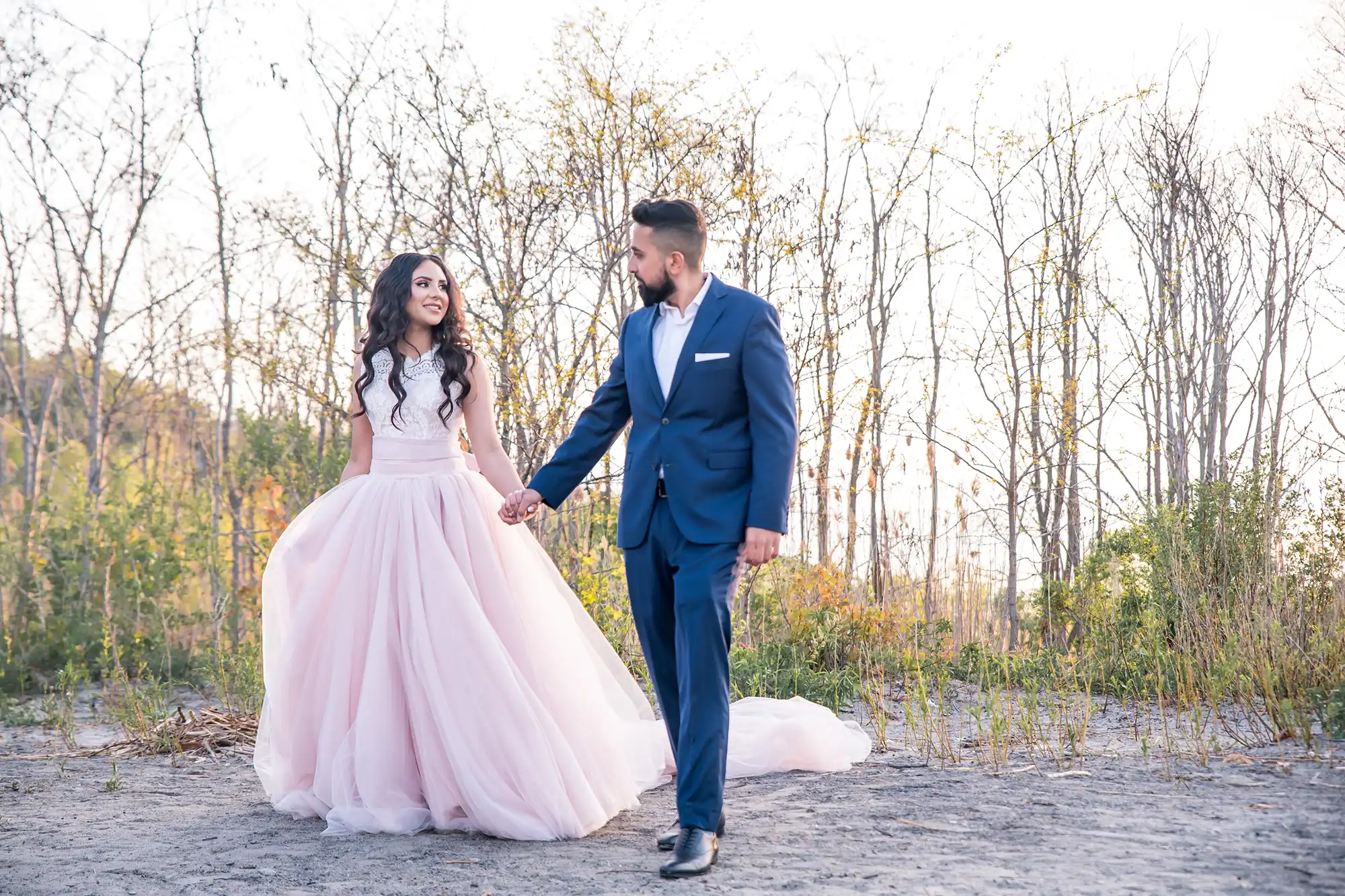
It’s a fair question and one we get a lot — especially from couples who already own a nice dress and are wondering whether it’s worth renting something different for the shoot. Short answer: it depends what you’re going for. But there’s a longer answer too, and it comes down to what a train actually does in a photo that a regular dress can’t.
This isn’t about saying one is “better” in every situation. It’s about understanding the actual visual difference, so you can decide based on what you want the photos to feel like rather than guessing.
What a Long Train Actually Adds to a Photo
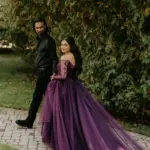
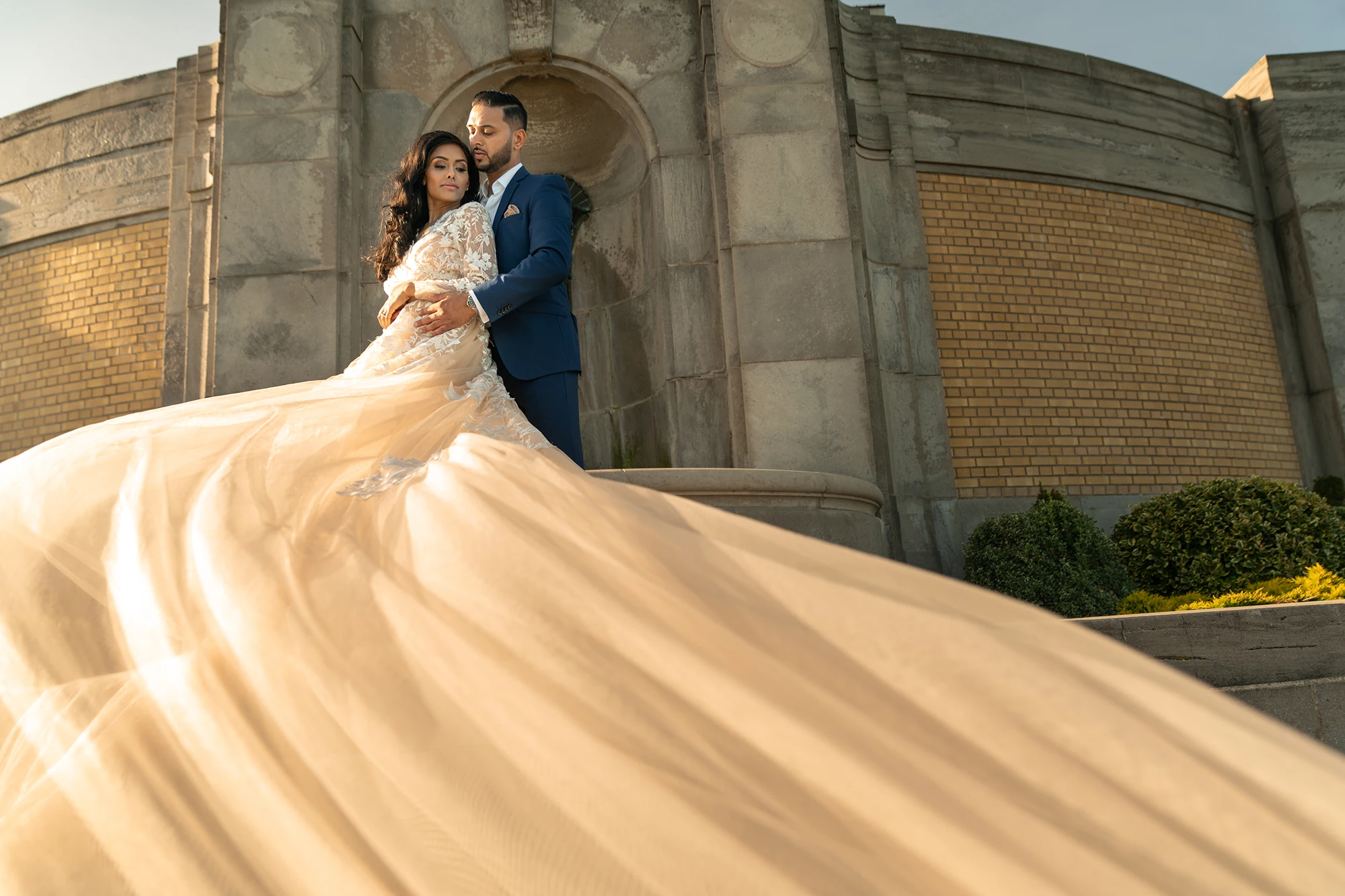
The simplest way to put it: a regular dress is static and a long-train gown is dynamic, even when you’re standing still. A train pools on the ground, extends the line of the body and gives the photographer something to frame with — leading lines, negative space, movement potential. Even in a posed, standing shot, a train adds visual weight and scale that a knee-length or even floor-length-without-train dress simply doesn’t have. It changes the proportions of the entire frame, not just what you’re wearing in it.
The other thing a train does is create a sense of occasion. There’s a reason trains are associated with weddings and red carpets — visually, they signal “this is a moment,” not just “this is an outfit.” For an engagement shoot specifically, that sense of occasion is often exactly what couples are going for. It elevates the images from “nice photos of us” to something that feels more cinematic and considered.
Where Regular Dresses Hold Their Own
To be fair, a regular dress isn’t without its advantages — and for some shoots it’s genuinely the better choice. Regular dresses are easier to move in, easier to manage in tight or crowded locations and they don’t require any of the train-management considerations (where it falls, who’s standing on it, how it looks when you sit). For urban shoots with a lot of walking between locations, or for couples who want a more casual, lifestyle-feeling set of images, a simple dress can photograph beautifully without any of the added complexity.
Regular dresses also tend to photograph more “true to life” — what you see is closer to what the camera captures, with less dependence on movement, wind or space to create the visual interest. If your priority is comfort and simplicity over drama, that’s a completely valid choice.
Side-by-Side – What Changes in the Photo
Once you start comparing the two side by side, the differences aren’t subtle — they show up in almost every type of shot. It’s not just about one dramatic “flying dress” moment versus none. The presence or absence of a train changes how the photographer frames things, how much the outfit contributes to the story of the image and even how forgiving the shoot is if something doesn’t go perfectly. Some of these differences matter a lot depending on your location and what kind of images you’re after, and some barely register. Here’s where the gap actually shows up.
Movement and Drama
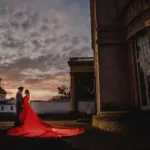
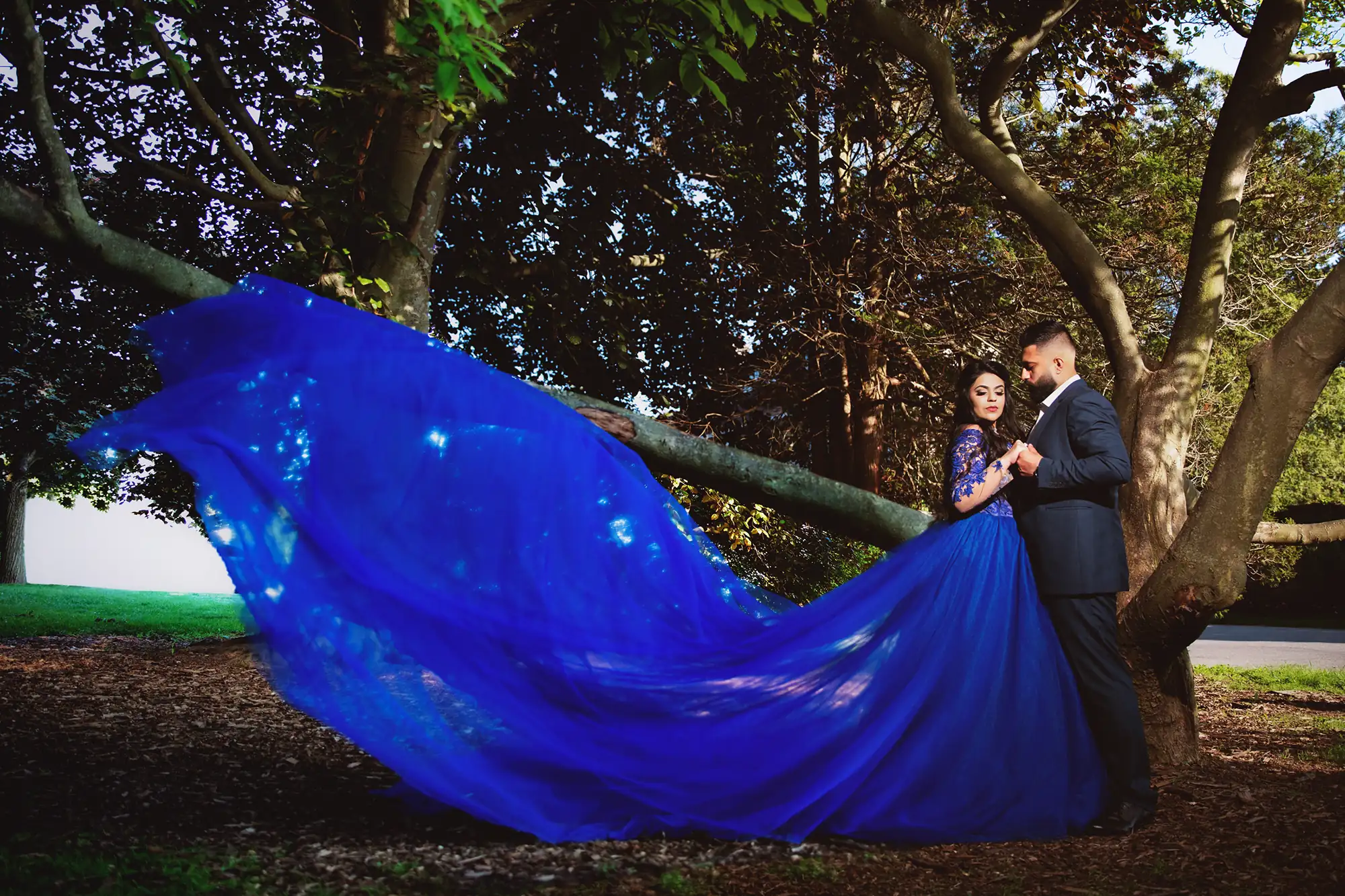
This is the biggest difference. A train in motion — walking, turning, spinning — creates fabric movement that becomes the visual focus of the shot. A regular dress, even a flowing one, doesn’t have the volume or length to create that same effect. If “flying dress” style photos are on your list, a train is essentially a requirement — there’s no version of that shot with a regular dress.
Framing and Composition
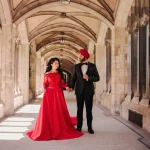
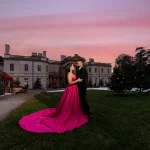
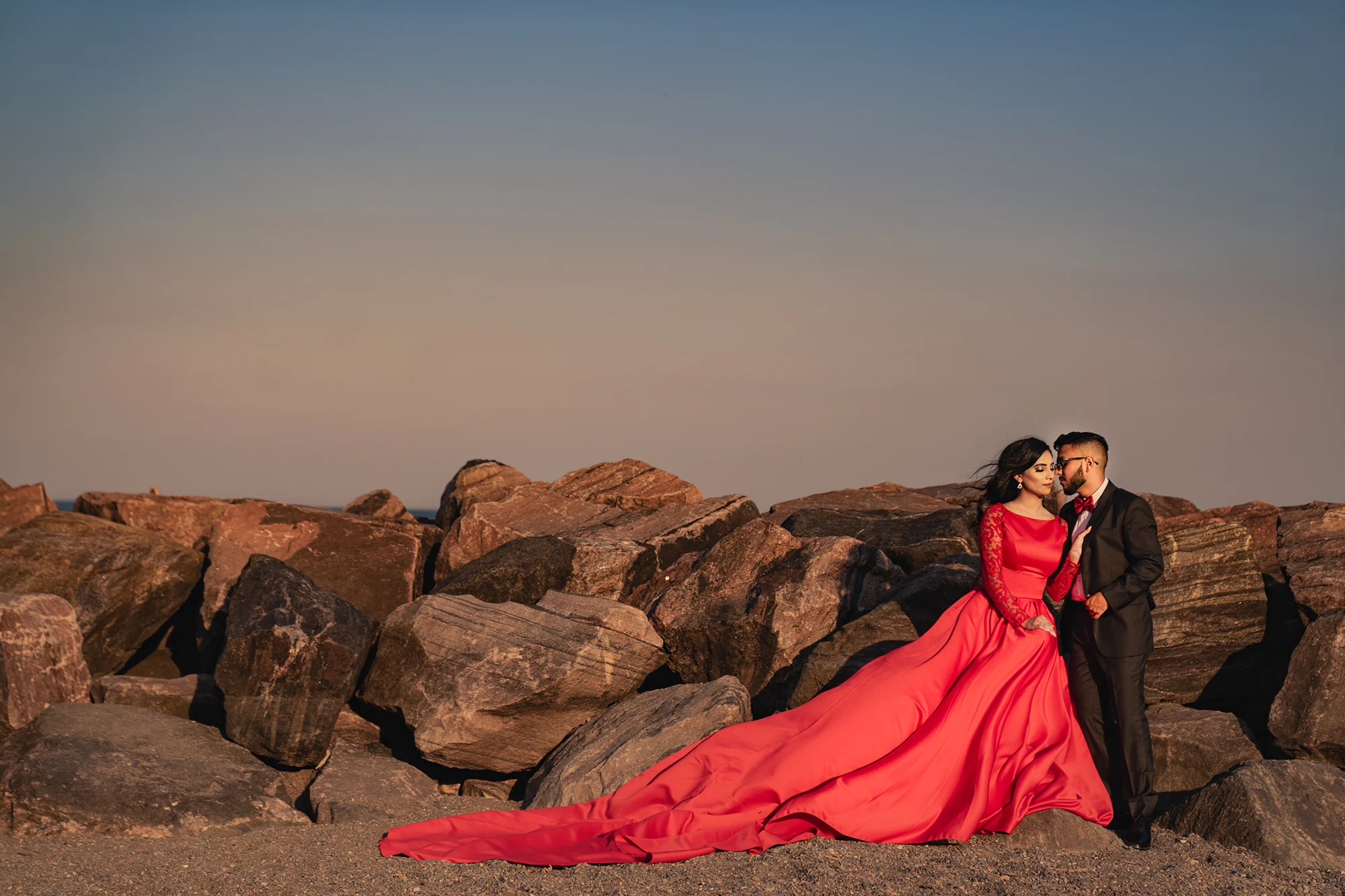
Photographers often talk about “filling the frame” and a train does this naturally, especially in wide shots. It gives weight to the bottom of the frame, balances out empty sky or background and creates a sense of scale — particularly useful in open locations like fields, beaches or large urban spaces where a person alone can look small in the frame.
Versatility Across Shot Types
A train doesn’t only work for the dramatic wide shots — it also photographs well in close-ups (draped over an arm, pooled at the feet) and in seated poses (spread out around you). A regular dress is more limited in range; it tends to look similar across most shot types because there’s less fabric to work with.
Practicality on the Day
This is where regular dresses win, plainly. No managing a train, no risk of standing on it, easier in vehicles, easier on stairs and easier basically everywhere that isn’t open ground. If your shoot involves a lot of locations or a lot of walking between spots, this is worth factoring into the decision.
So Which Should You Choose?
A few questions can help make the decision clearer:
- Are you going for cinematic, editorial-style images, or more casual lifestyle photos? Trains lean cinematic. Regular dresses lean casual.
- Is your location open (fields, beaches, large parks) or tight and urban (cafes, narrow streets, indoor spaces)? Trains need room. Regular dresses don’t.
- Is the “flying dress” shot something you specifically want? If yes, a train isn’t optional — it’s the whole shot.
- How much do you want the outfit itself to be part of the story, versus a backdrop to the moment? Trains tend to become part of the story. Regular dresses tend to stay in the background.
There’s no wrong answer here — it genuinely depends on what feels right for you and what your shoot location can support.
Why Couples Often End Up Choosing a Train Anyway
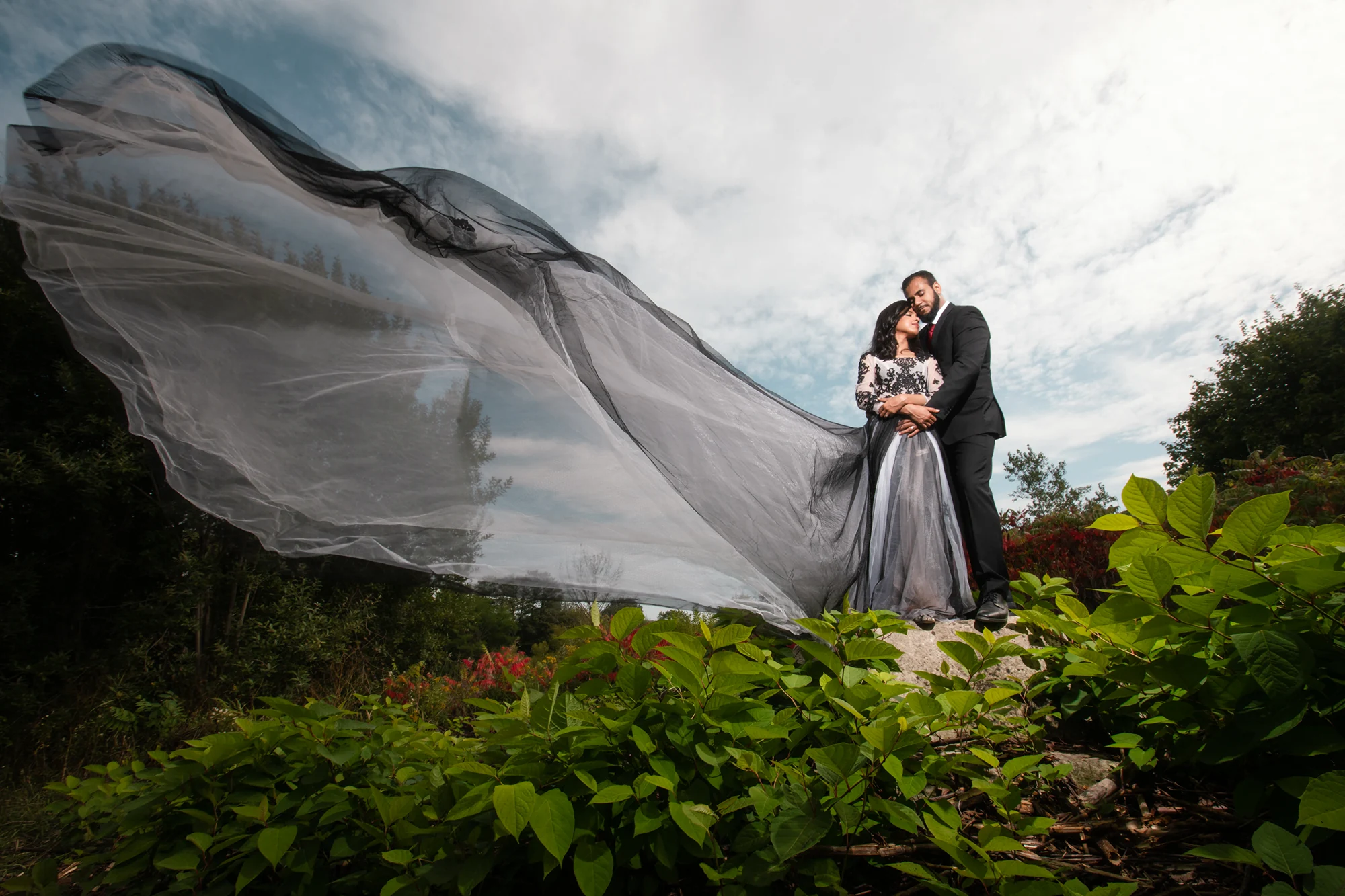
Even couples who come in thinking they want something simple often end up drawn to a train once they see it in motion. Photos look different in person than they do in your head — and the difference a train makes to the overall feel of an image is hard to picture until you see it. It’s also worth noting that renting removes the usual hesitation around trains: no concerns about cost, storage or “when will I ever wear this again.” It’s one shoot, one set of unforgettable images and then it goes back.
All 200+ gowns in our catalogue were designed specifically for movement, for camera presence and for exactly the kind of drama that makes engagement photos stand out. Whether you end up choosing a train or something simpler, trying a few options on during a fitting is the easiest way to see the difference for yourself.
About the designer
Helen Illumina is the self-taught designer behind Athena Dress Rental, creating couture gowns in Canada using premium fabrics sourced worldwide.
about us