 BACK
BACK Bright
 Dark
Dark Floral Print
 Multicolored
 White
White Pink
Pink Beige
Beige Red
Red Blue
Blue Green
Green Purple
 Black
Black Gold
Gold Silver
 Neutral
 BROWSE ALL DRESSES
Indoor vs. Outdoor Engagement Shoot – How to Choose Your Dress
The location question and the dress question are almost always asked separately. They shouldn’t be. Where you shoot directly affects what your dress needs to do – how it moves, how the fabric performs in the available light and whether the silhouette reads the way you’re imagining. A gown that’s breathtaking in an open field can feel oversized and difficult to manage in a narrow studio space. And a sleek, structured dress that photographs beautifully against white walls can disappear entirely into a wide outdoor landscape. Before you fall in love with a specific gown, it’s worth thinking about where you’re shooting and what that location actually asks of the dress.
We’ve worked with couples across every kind of setting – private studios, botanical gardens, urban rooftops, open fields, lakesides and everything between. Here’s what we’ve learned about matching the dress to the environment.
How Indoor and Outdoor Settings Actually Differ (Photographically)
This isn’t just about aesthetics – it’s about light, space and what the camera is actually capturing. Indoor shoots are controlled environments: the light is consistent, the backgrounds are deliberate and the photographer can predict almost exactly what they’ll get. That control is a genuine advantage, but it also means the dress has to carry more of the visual weight on its own because the environment isn’t doing as much.
Outdoor shoots are the opposite – the setting does an enormous amount of work, which gives the dress room to interact with the landscape, the light and the movement of air rather than having to stand alone. The challenge outdoors is variability: light changes, wind is unpredictable and surfaces aren’t always what you planned for. Each environment rewards different things in a gown and punishes different things. Understanding which side of that equation you’re on before you choose a dress makes the whole decision simpler.
Choosing a Dress for an Outdoor Shoot
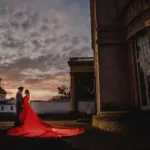
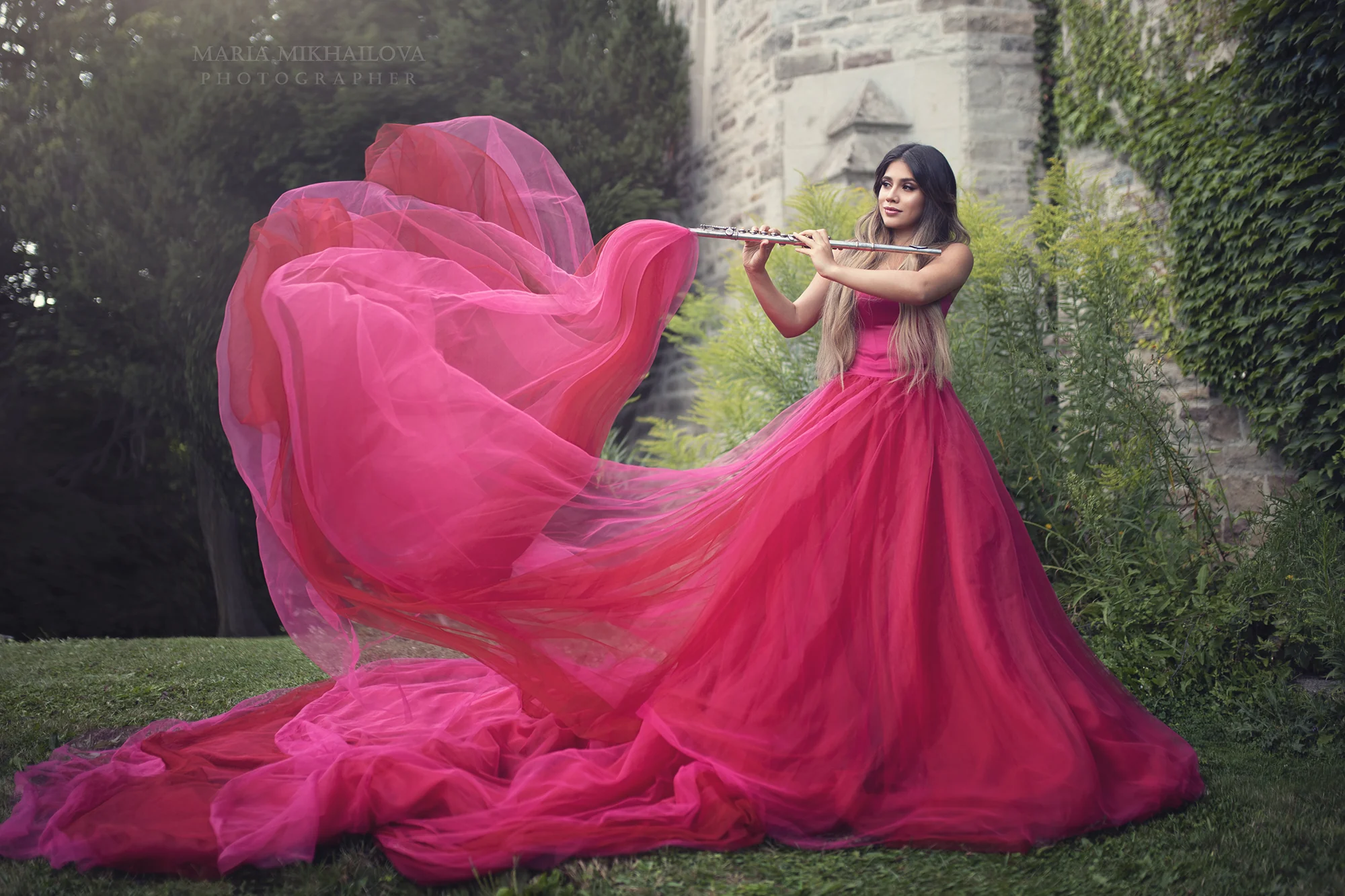
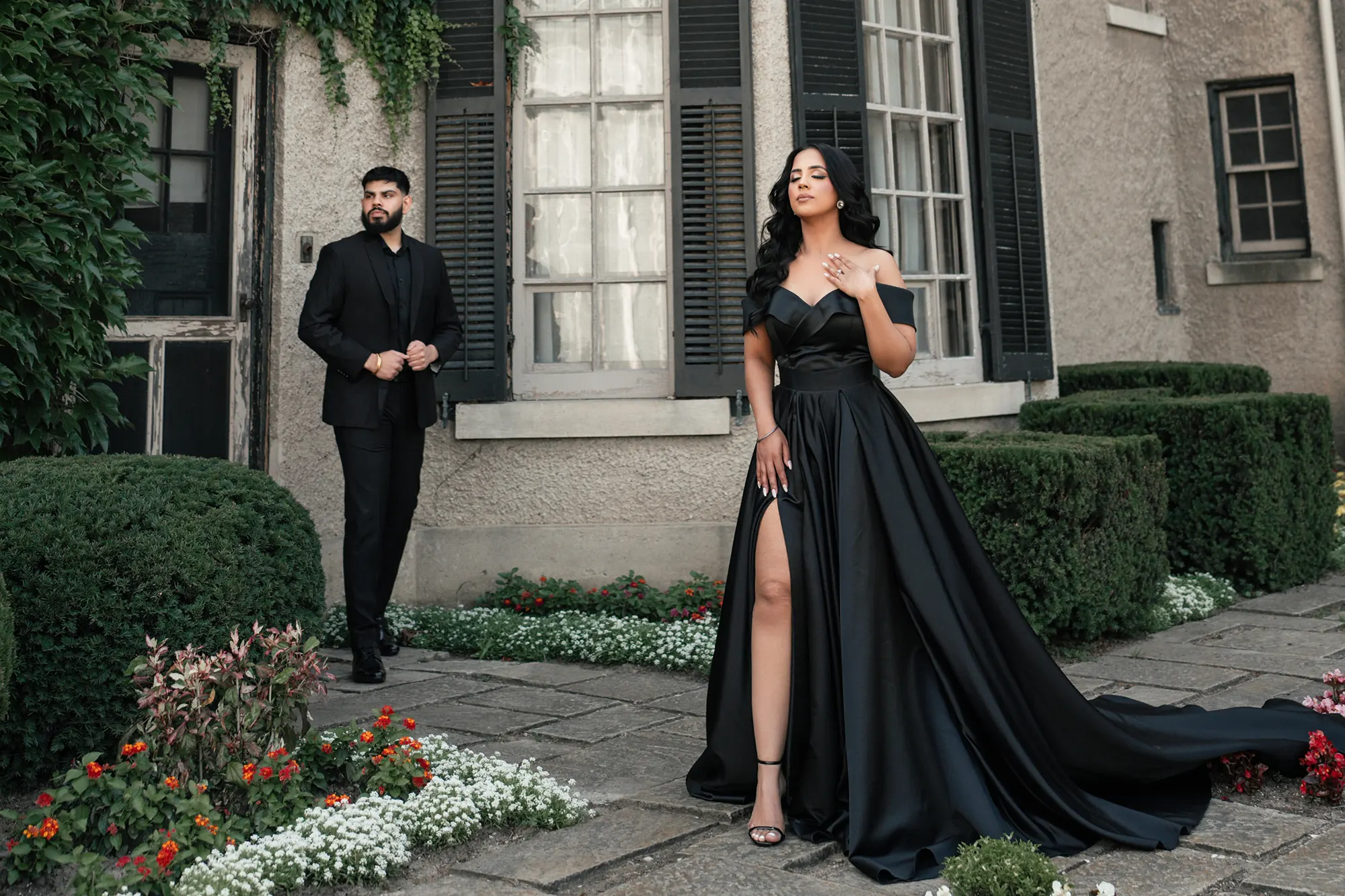
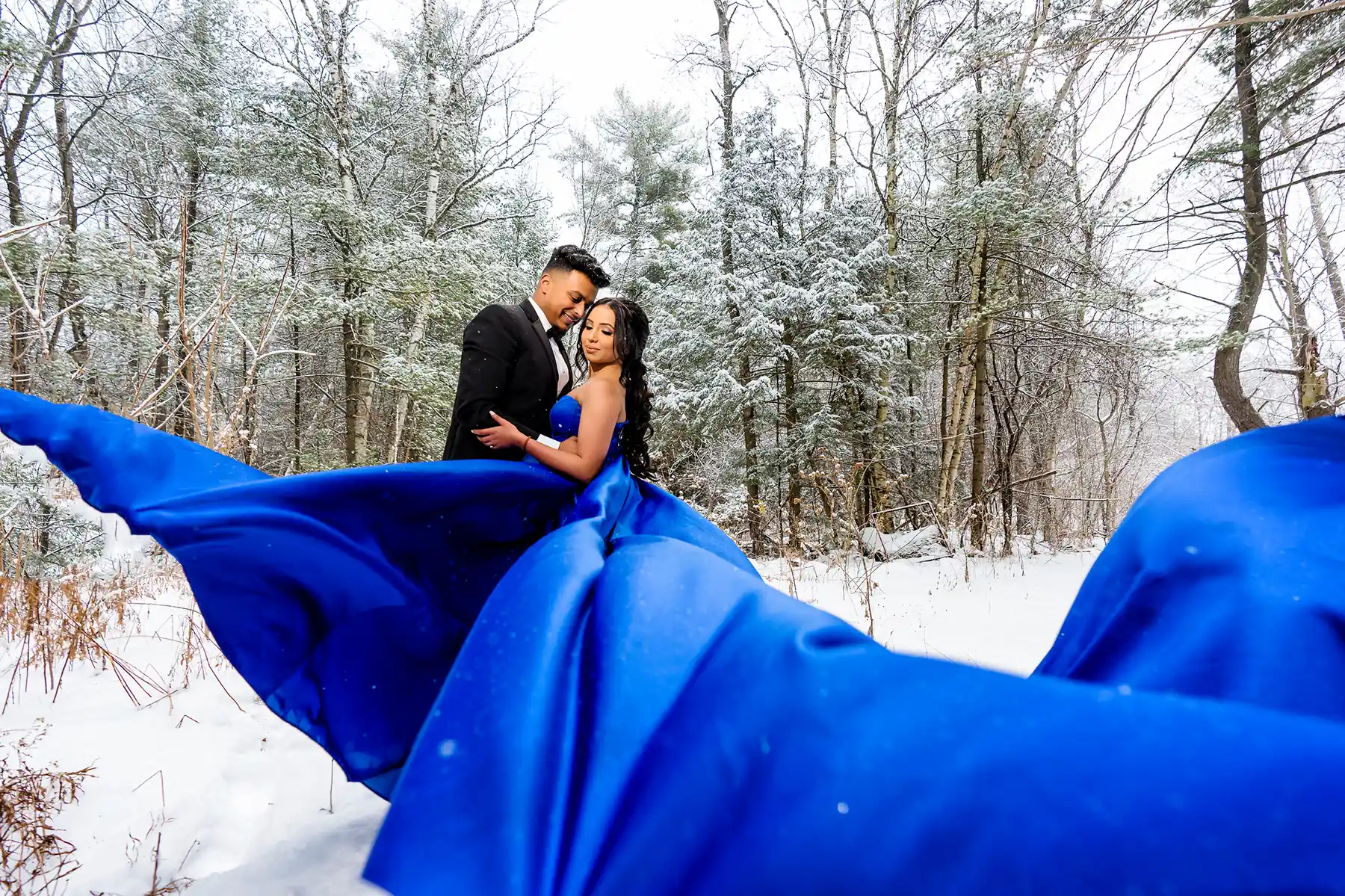
Outdoor shoots are where long-train gowns do their most dramatic work. Space is the key variable – and outdoors, you almost always have it. Open fields, beaches, forested trails and lakesides all give a train room to move, to be photographed from a distance and to interact with the environment in ways that simply aren’t possible inside. Wind becomes an asset rather than a nuisance: a satin or tulle train lifting slightly in a breeze creates the kind of movement that takes a photo from nice to genuinely cinematic. That’s not an accident of luck – it’s what the gowns in our dress catalogue were engineered for.
Fabric choice matters a lot outdoors. Lighter fabrics – tulle, chiffon, lighter satins – respond to air movement and photograph beautifully in natural light, particularly golden-hour light which adds warmth and dimension to almost any pale or mid-tone colour. Heavier fabrics – structured lace, thicker satin – hold their shape better but don’t catch air the same way. If movement is a priority and you’re shooting outdoors, lean lighter. If you’re doing a lot of standing or seated poses in a garden or courtyard setting, a heavier fabric drapes beautifully and holds its structure in the frame.
Colour outdoors depends heavily on the backdrop:
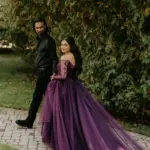
- Natural green backdrops (parks, forests, fields) → blush, ivory, champagne, earthy neutrals and deep jewel tones all work. Avoid colours that are too similar to the foliage – sage and olive can blend into a green background rather than contrasting with it.
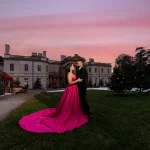
- Open sky or neutral landscapes → almost any colour works, but whites and soft neutrals read particularly beautifully against blue sky and open space.
- Urban outdoor settings (courtyards, streets, rooftops) → bolder colours and richer tones hold their own against concrete and brick better than soft pastels.
The Flying Dress Shot Outdoors
If this is on your list – and for many couples it is – outdoor photography locations are the only place it works. You need space, ideally some natural wind and a dress with enough train volume to actually catch air. Not every outdoor location delivers this equally – open fields and beaches are ideal, while dense forests or urban streets with buildings blocking airflow are less reliable. We’re happy to talk through whether your planned location is likely to work for this kind of shot when you reach out.
Choosing a Dress for an Indoor Shoot
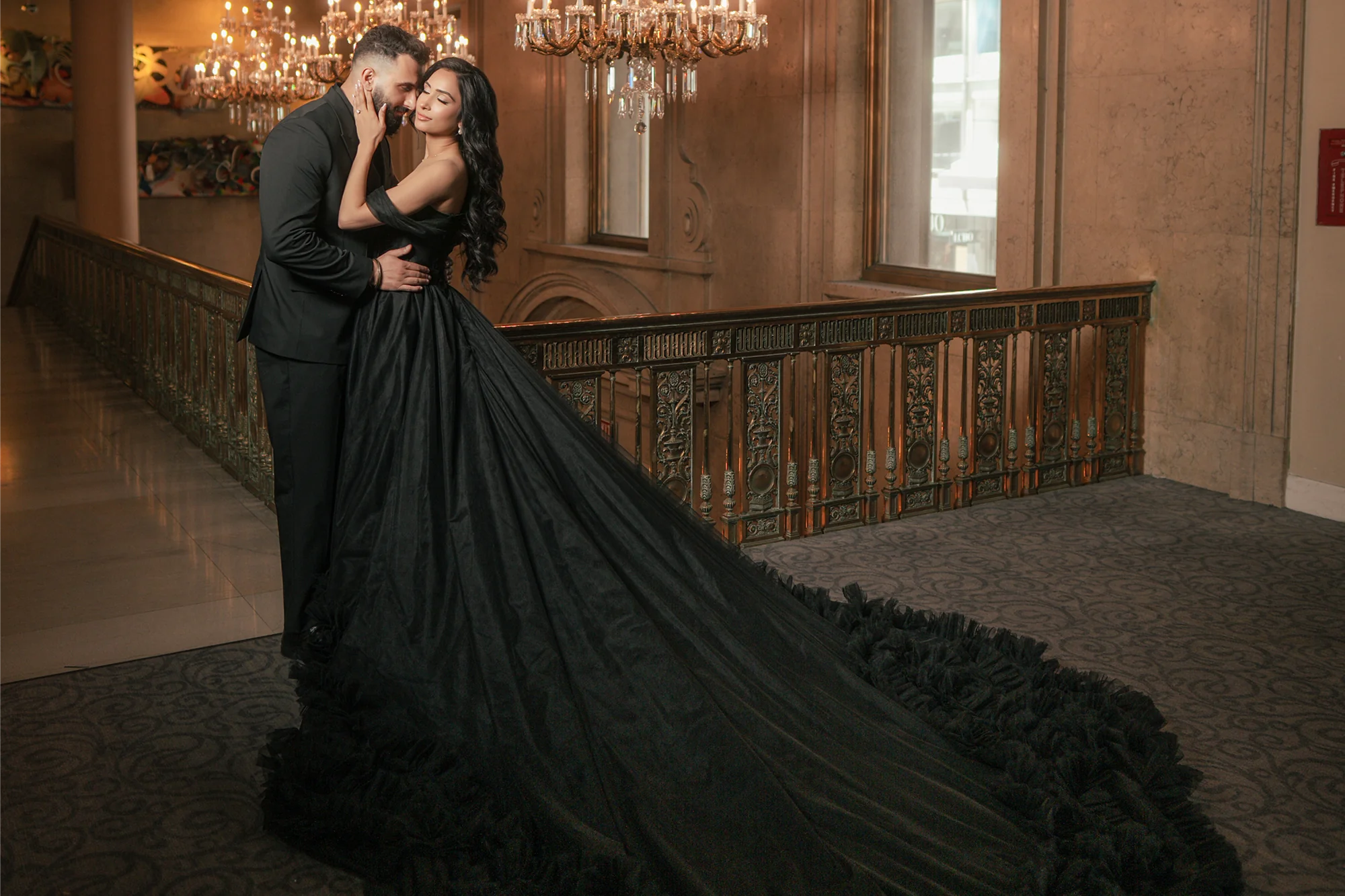
Indoor shoots have a completely different visual logic. Without a landscape to interact with, the dress becomes the primary visual element – which means fabric texture, colour and how the gown reads against a controlled background matter more than movement potential. Long trains still work beautifully indoors, but the emphasis shifts: a train pooling on a clean floor or draped across a staircase is a deliberate compositional choice rather than a movement-based one. Think editorial and still rather than cinematic and dynamic.
Fabric texture becomes much more important indoors because the camera picks up detail that outdoor light sometimes softens. Lace photographs with extraordinary richness in indoor light – every thread reads clearly. Satin catches artificial and window light in ways that add drama without needing the sun to do it. Tulle indoors can look soft and romantic or slightly flat depending on the light source, so it’s worth discussing with your photographer before committing.
Colour indoors depends on the palette of the space itself. A few principles that hold up consistently:
- White walls or neutral studio backdrops → almost any colour works. Deep jewel tones create striking contrast; soft neutrals create a dreamy, cohesive feel.
- Warm, textured interiors (wood, exposed brick, vintage furniture) → earthy tones and rich jewel colours feel most at home. Pale blush or ivory can read as slightly washed-out unless the light is very warm.
- Minimalist or modern spaces → bold colours and strong silhouettes tend to photograph with the most impact. The cleaner the background, the more the dress has to say.
Managing a Train Indoors
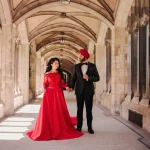
Trains are manageable indoors – but they require a bit more intentionality than outdoors. There’s less space to let a train fall naturally, which means thinking about how it’s arranged in each shot rather than letting the environment do the work. The good news: a pooled or draped train on a polished floor, a marble surface or a wide staircase creates genuinely beautiful images. It’s a different aesthetic than a train in motion outdoors – but it’s just as compelling when the environment is right.
When You’re Shooting Both Indoors and Outdoors
Some engagement sessions cover both – starting at a studio or interior location and moving outside, or combining a garden with an indoor café or event space. In this case, the dress choice comes down to which setting you’re prioritising for the most dramatic shots. If the outdoor portion is the main event and the indoor section is more of a relaxed complement, lean toward a gown that performs outdoors and adapts well inside. If it’s the reverse, choose for the interior and let the outdoor section be the unexpected bonus.
Either way, a long-train gown is more versatile across environments than most people expect going in. The same dress that flows dramatically in a field can drape beautifully on a staircase – it just asks for a slightly different approach from the photographer.
We Can Help You Match the Dress to the Location
This is exactly the kind of conversation we have at fitting appointments. Come in with your location in mind – even just a general idea – and we’ll pull options that make sense for the environment, the light and the look you’re going for. For clients renting online across Canada and the US, include your shoot location and setting in the rental request and we’ll factor it into the dress recommendation.
About the designer
Helen Illumina is the self-taught designer behind Athena Dress Rental, creating couture gowns in Canada using premium fabrics sourced worldwide.
about us